Reactive database platform
Our own reactive BaaS on native SpacetimeDB — ~200k realtime deliveries/s at p95<20ms.
Reactive database platform
Challenge
We wanted the developer experience of a reactive backend — live queries, a typed client and server — but a single-Node runtime tops out around 25-30k realtime deliveries/s, and we did not want to depend on a rented backend.
What we did
Our own reactive BaaS with a native SpacetimeDB transactional/realtime engine inside: a compiler turns our schema and functions into an STDB module, a compatibility layer keeps the same client and server API our apps already use (ideally the same client, a different URL), and a worker handles actions and external I/O (Stripe, email, LLM, webhooks); the surface is proven to carry zero production dependency on the reference implementation, which stays only as a differential-test oracle.
Result
Existing apps move over with little more than a URL change, onto an engine that holds ~200k realtime deliveries/s at p95<20ms — roughly 7x per box over the old runtime, without the Node ceiling.
Dev-story article
Reactive database platform: how the project was built
Every one of our apps wants the same thing from a backend: live queries, a typed client and server functions, without a rented product in the middle. We already had a reactive BaaS running on a single Node thread, and it worked — until the fanout numbers stopped being comfortable. This is the next implementation of that exact product, with a native SpacetimeDB engine inside, under one hard rule: the apps must not have to change.
Sections
05
Modules
05
Stack
Rust + SpacetimeDB
Why the project exists
We wanted the developer experience of a reactive backend — live queries, a typed client and server — but a single-Node runtime tops out around 25-30k realtime deliveries/s, and we did not want to depend on a rented backend.
Every one of our apps wants the same thing from a backend: live queries, a typed client and server functions, without a rented product in the middle. We already had a reactive BaaS running on a single Node thread, and it worked — until the fanout numbers stopped being comfortable. This is the next implementation of that exact product, with a native SpacetimeDB engine inside, under one hard rule: the apps must not have to change.
What was built
Our own reactive BaaS with a native SpacetimeDB transactional/realtime engine inside: a compiler turns our schema and functions into an STDB module, a compatibility layer keeps the same client and server API our apps already use (ideally the same client, a different URL), and a worker handles actions and external I/O (Stripe, email, LLM, webhooks); the surface is proven to carry zero production dependency on the reference implementation, which stays only as a differential-test oracle.
A compiler turns our schema and functions into a native SpacetimeDB module (Rust), so transactions and realtime run on an engine built for exactly that. A compatibility layer re-implements the same client and server API our apps already speak — the ideal is the same client library pointed at a different URL. A worker handles actions and external I/O (Stripe, email, LLM, webhooks) outside the transactional core, and a dashboard covers schema, data and logs. The old single-Node stack stays as a working fallback until a proven cutover.
Main modules and user path
The reason for the rewrite is a number: the old single-Node runtime tops out around 25-30k realtime deliveries/s, while a native engine holds ~200k at p95<20ms — roughly 7x per box. The whole design exists to reach that ceiling without reintroducing the Node bottleneck in the compatibility path.
Independence is treated as something to prove, not claim: a machine scanner walks every production dependency, and a dedicated gate runs the corpus with the reference package physically removed. The gate is red first — the very first receipt shows it failing before the work — and only turns green once the production surface genuinely does not import the reference implementation.
Compatibility is verified differentially: a minimal reference app runs against both engines and the outputs are compared, so the reference implementation ends up as a test oracle rather than a runtime dependency.
The wire codec is our own, not borrowed from the reference package, so even the browser client stops pulling that package into production — down to error identification matching the official behavior by signal.
Code generation and new projects target our own packages; the reference API stays only as a compatibility and oracle surface. Migrating an existing app is meant to be a URL change, and the parity corpus (16/16 and 18/18 on the release gates) is what backs that claim.
Architecture and technology decisions
Built with Rust, SpacetimeDB, Realtime BaaS.
A Rust SpacetimeDB module for schema and reducers; a compiler from our schema and functions to that module; a compatibility layer for the client and server API; our own wire codec; a Node control-plane gateway (dashboard and deploy) for low-traffic operations; a worker for actions and external I/O; and parity fixtures, benchmarks and independence gates in CI.
Result and lessons
Existing apps move over with little more than a URL change, onto an engine that holds ~200k realtime deliveries/s at p95<20ms — roughly 7x per box over the old runtime, without the Node ceiling.
Our apps get a reactive backend we own end to end, on an engine that holds ~200k realtime deliveries/s at p95<20ms, with the same live-query model developers expect — and a migration that is meant to be a URL change, backed by a green independence gate rather than a promise.
Related articles
Read next
Related project stories
These projects share nearby technical or product decisions, so they show how the same principle behaves in another context.
 Dev-story
CMS
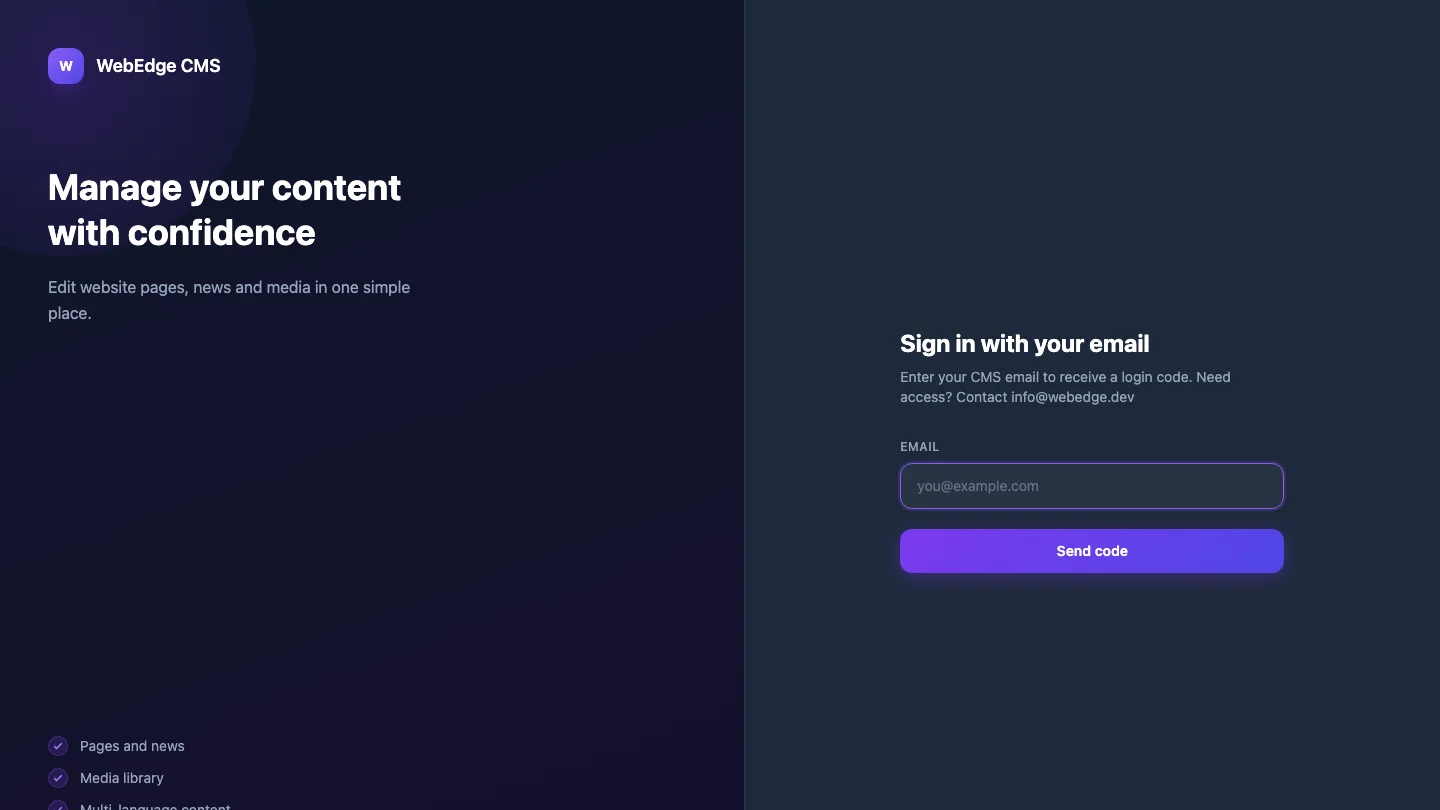
A dynamic headless CMS on webedge-db — content types, media, roles, and the public read API behind our sites and their articles.
 Dev-story
MTP-RDMA inference cluster
Tensor-parallel 27B across two Macs over Thunderbolt RDMA — ~70 → 90–100 tok/s.
 Dev-story
Calendar booking platform
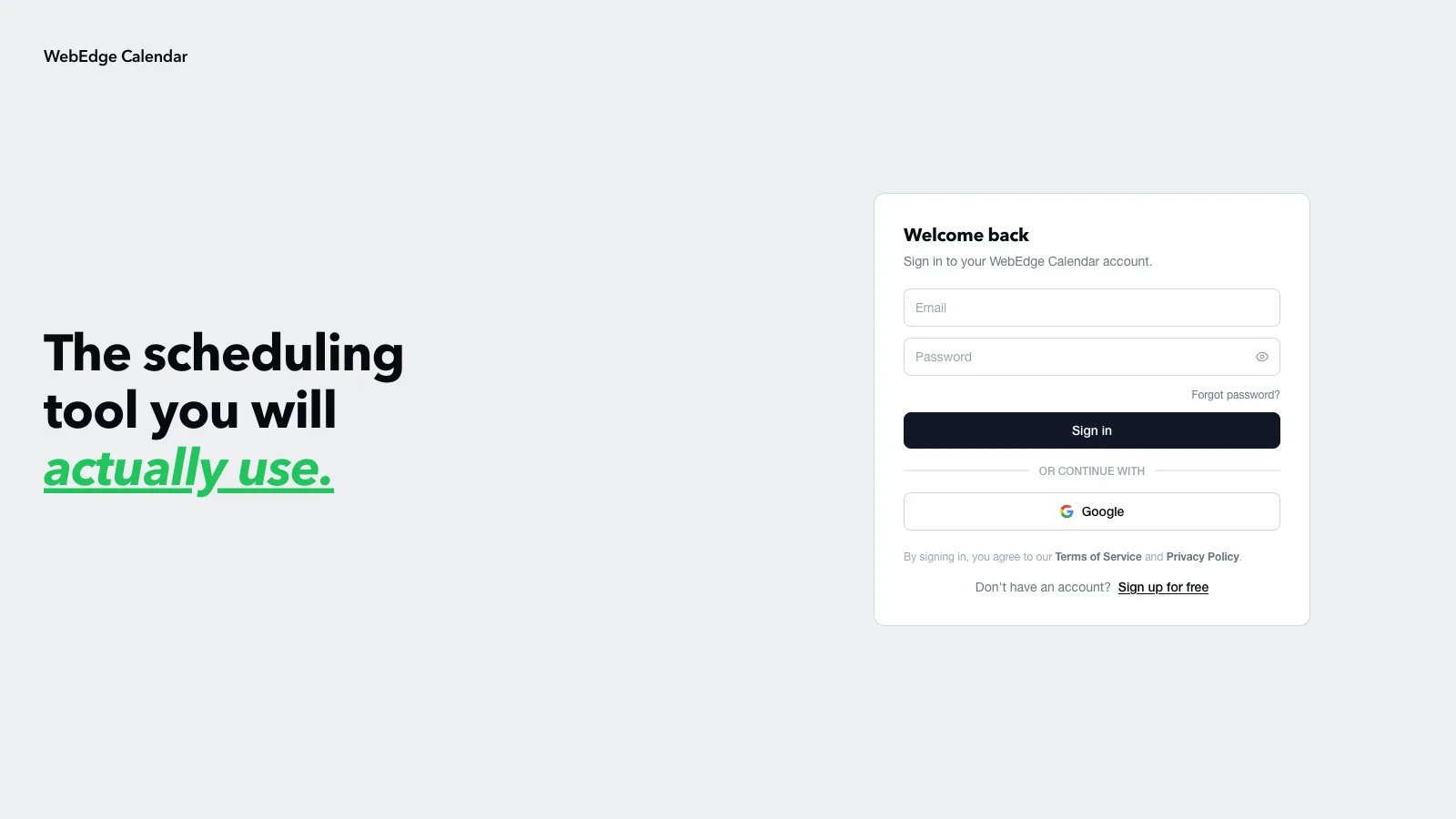
Scheduling on Vue 3 — availability, bookings, confirmations and one-click Meet video links.
Have a similar idea?
Discuss your project