Billing and invoices app
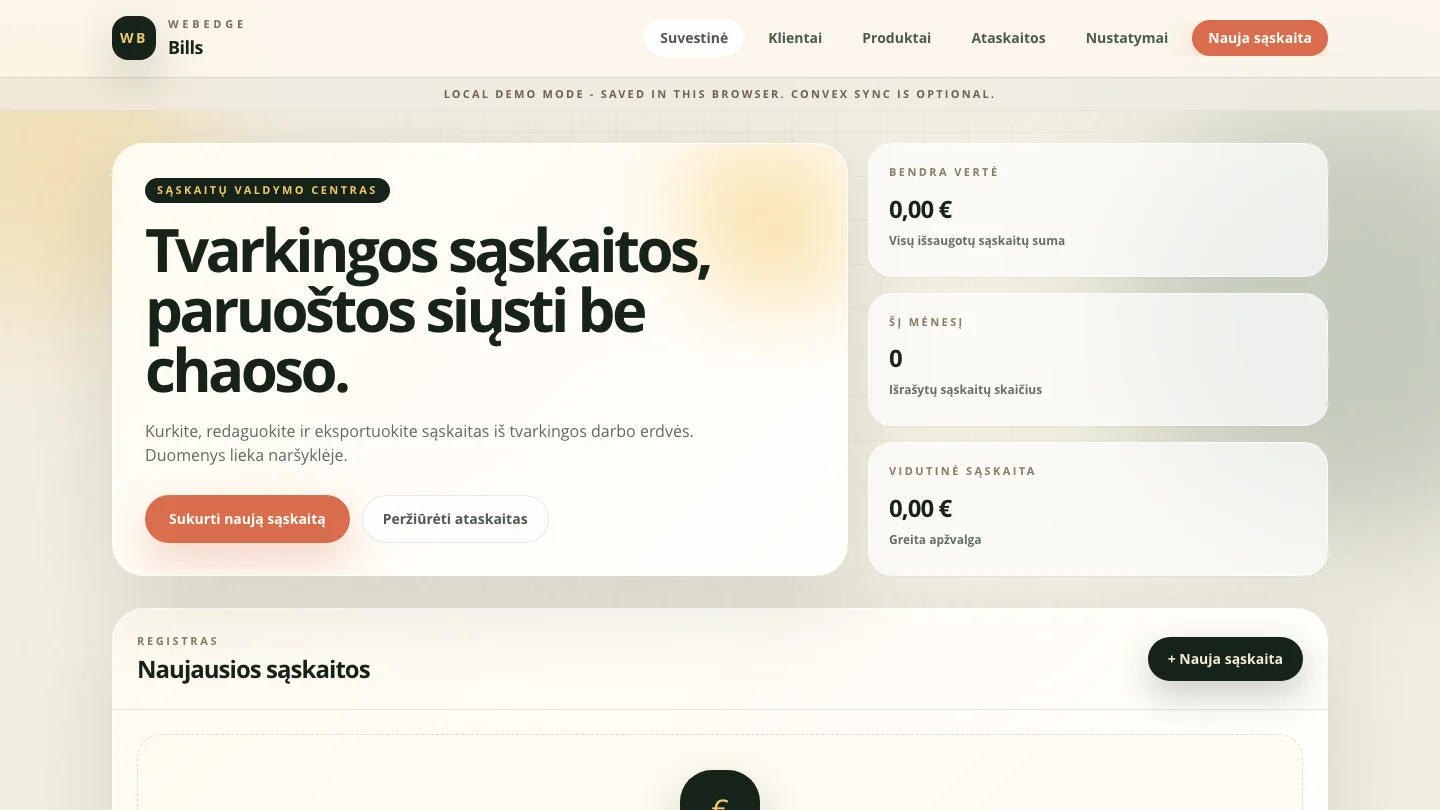
A local-first Vue 3 invoicing and Lithuanian-accounting app, with an optional webedge-db sync mode.
 Dev-story
Challenge
A small invoicing tool shouldn't require a backend, accounts or secrets just to draft and preview an invoice.
What we did
A Vue 3 app that runs browser-only by default — clients, products, seller settings and invoices live in `localStorage` — with an optional webedge-db mode that adds auth and sync when you need more than one device.
Result
You can open it and invoice immediately with no setup, and switch on the webedge-db backend later without changing how the app is used.
Dev-story article
Billing and invoices app: how the project was built
Most invoicing tools force you to sign up before you can see a single screen. This one flips that: it opens as a browser-only app with no secrets and no backend, storing invoices, clients, products and seller settings in localStorage under the key 'bills'. The tension was keeping that zero-friction demo path fully intact while bolting on a real authenticated, multi-user sync mode over a reactive backend, without the two modes leaking into each other.
Sections
05
Modules
05
Stack
Vue 3 + webedge-db
Why the project exists
A small invoicing tool shouldn't require a backend, accounts or secrets just to draft and preview an invoice.
Most invoicing tools force you to sign up before you can see a single screen. This one flips that: it opens as a browser-only app with no secrets and no backend, storing invoices, clients, products and seller settings in localStorage under the key 'bills'. The tension was keeping that zero-friction demo path fully intact while bolting on a real authenticated, multi-user sync mode over a reactive backend, without the two modes leaking into each other.
What was built
A Vue 3 app that runs browser-only by default — clients, products, seller settings and invoices live in `localStorage` — with an optional webedge-db mode that adds auth and sync when you need more than one device.
A Vue 3 invoicing and Lithuanian-accounting app with a fully Lithuanian-localized UI and invoice domain models built for LT bookkeeping. It runs in two distinct modes from one codebase: a browser-only demo backed by localStorage, and a configured mode where sign-in, per-user data scoping and sync run against our self-hosted reactive backend on our own infrastructure.
Main modules and user path
Two runtime modes from a single build: a browser-only demo that needs no env vars or secrets, and a configured sync mode gated behind authentication
A localStorage data layer keyed on 'bills' that persists invoices, clients, products and seller settings across refreshes with no server round-trip
Lithuanian-accounting invoice domain models plus a fully LT-localized interface, PDF preview, catalogs and reports
Email-and-password sign-in with mandatory email verification, OTP delivered through the WebEdge mailer, and optional Google OAuth left as env-flag toggles
Per-user scoping enforced in the reactive backend so invoices, catalogs, settings and reports are bound to the signed-in user — and a hard rule that configured mode never silently falls back to localStorage on an auth or runtime error
Architecture and technology decisions
Built with Vue 3, webedge-db, Local-first.
Vue 3 with Vite on the frontend, a self-hosted reactive backend on our own infrastructure (backend and site on separate ports) with Better Auth for sessions and OTP mail, deployed to Cloudflare Pages with the browser-only demo achievable by dropping the backend env values.
Result and lessons
You can open it and invoice immediately with no setup, and switch on the webedge-db backend later without changing how the app is used.
The same codebase serves a no-signup demo you can try in seconds and a real per-user accounting app, with the two modes cleanly separated and no silent degradation between them.
Related articles
Read next
Related project stories
These projects share nearby technical or product decisions, so they show how the same principle behaves in another context.
 Dev-story
CMS
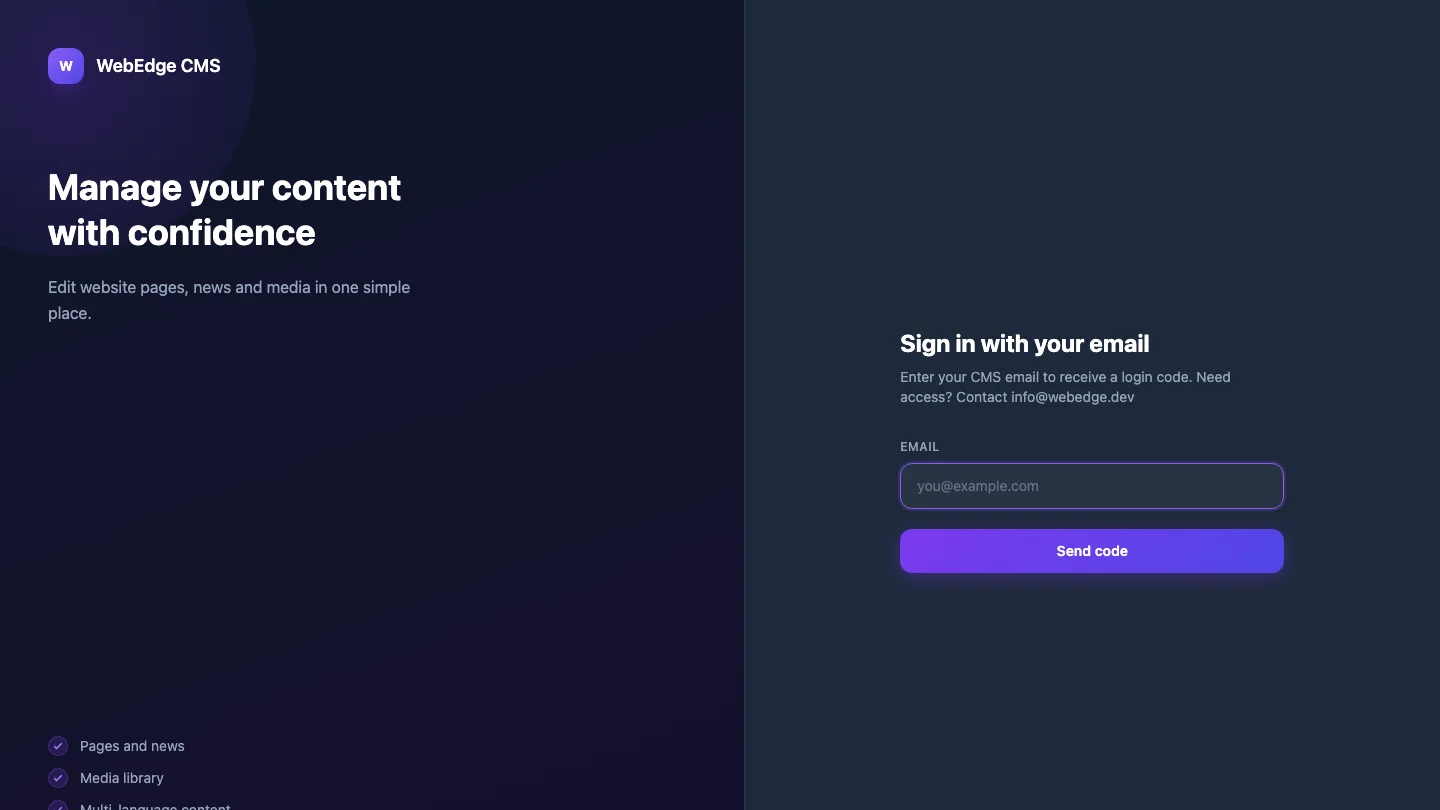
A dynamic headless CMS on webedge-db — content types, media, roles, and the public read API behind our sites and their articles.
 Dev-story
Calendar booking platform
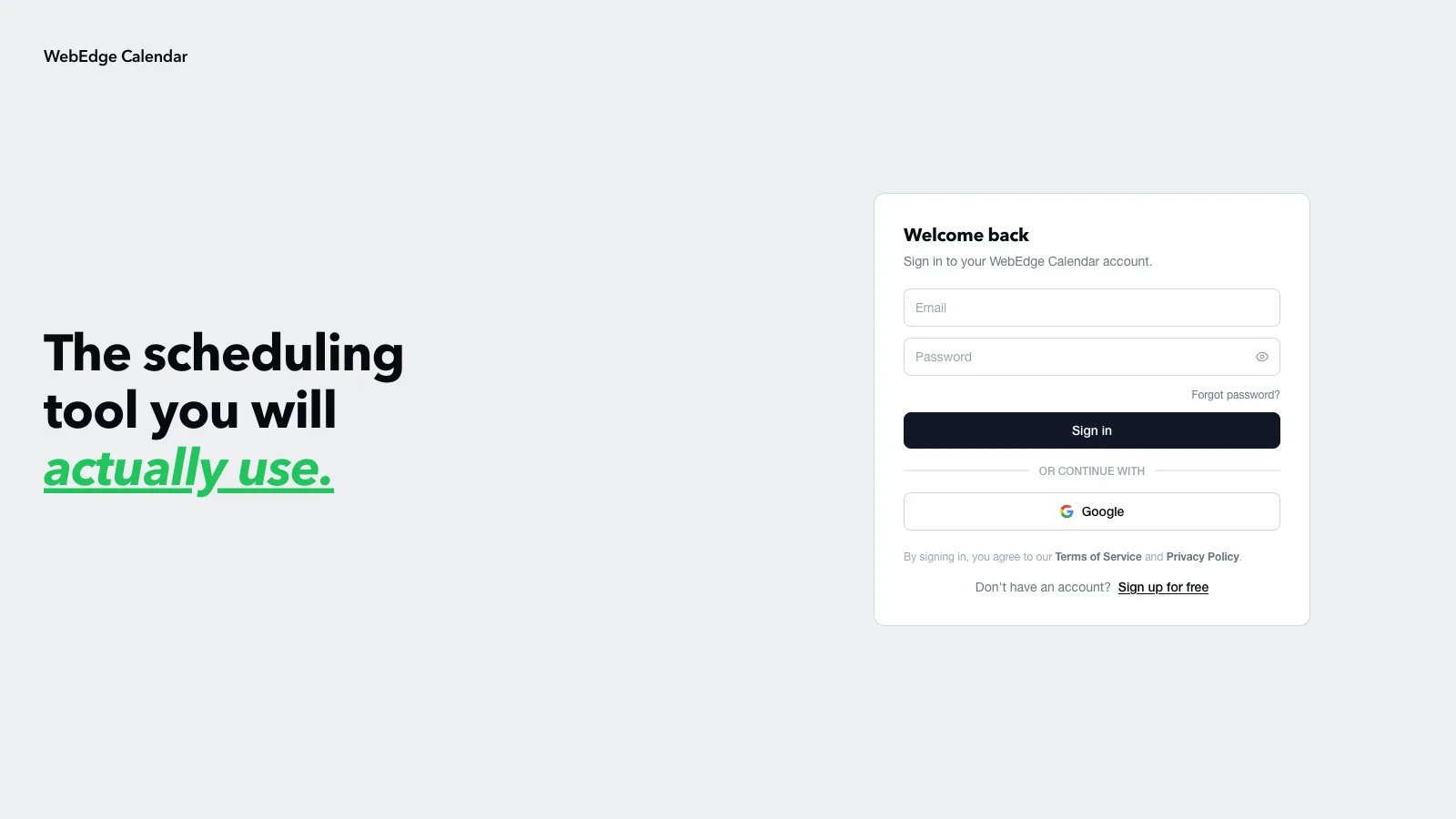
Scheduling on Vue 3 — availability, bookings, confirmations and one-click Meet video links.
 Dev-story
FableVita
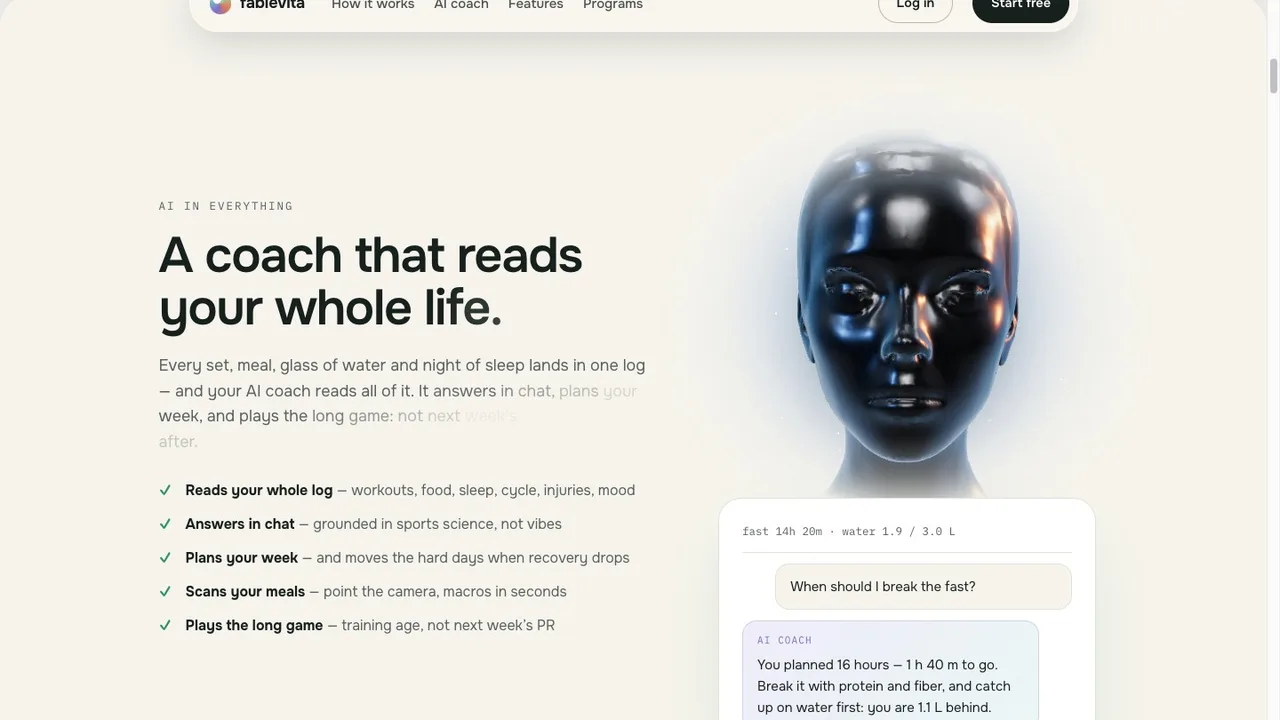
FableVita — an AI fitness coach with leagues, quests and a fraud-safe rewards economy.
Have a similar idea?
Discuss your project